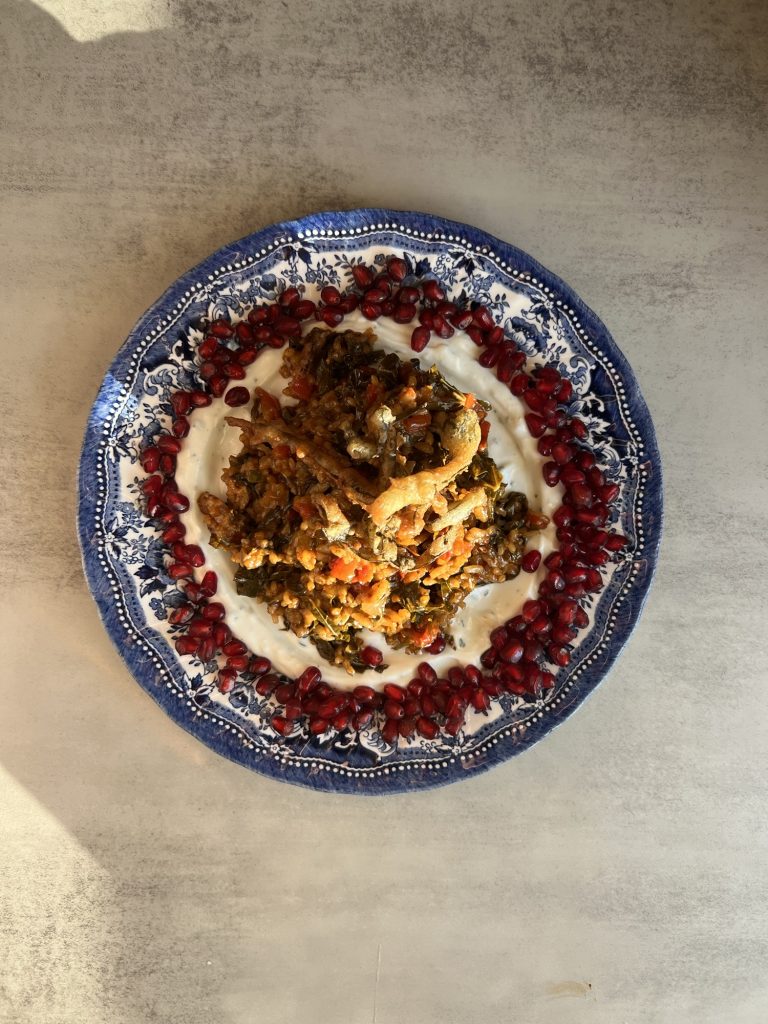
If you’re Middle Eastern, especially Levantine like me, you know there’s so much to appreciate and love about yalangi. It’s a true labor of love, requiring time, patience, and care to prepare.
But what if you could enjoy all those beautiful, familiar flavors without having to go through the entire process of making traditional yalangi? What if you could experience them in a deconstructed form? That’s exactly what this dish is all about!
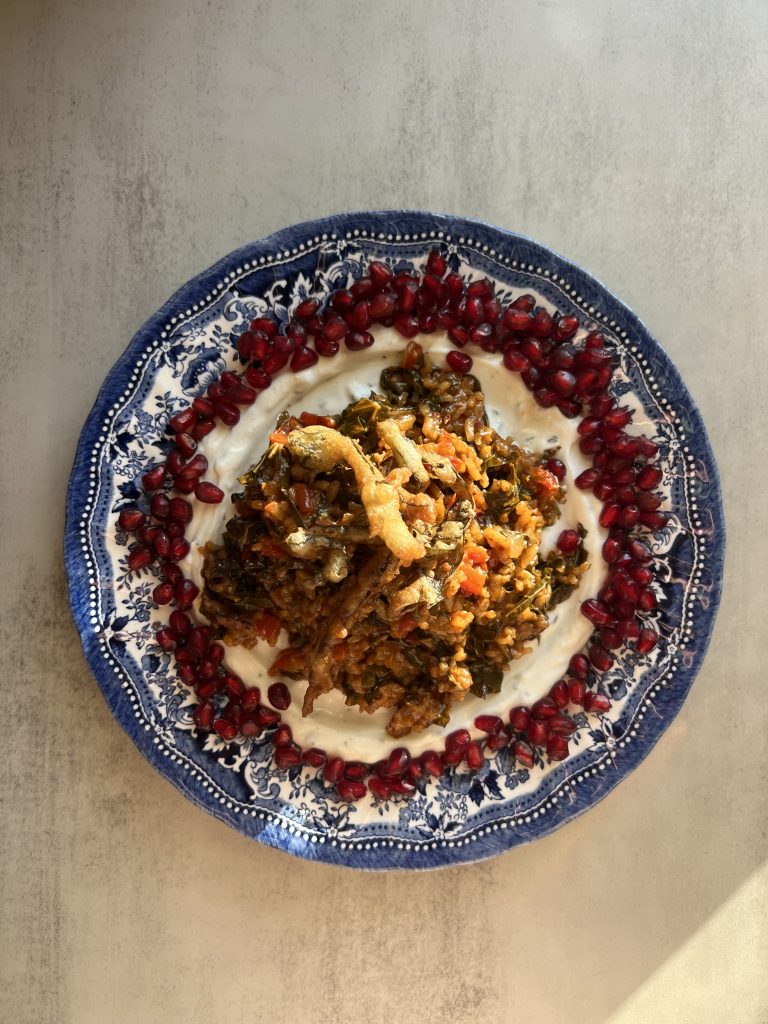
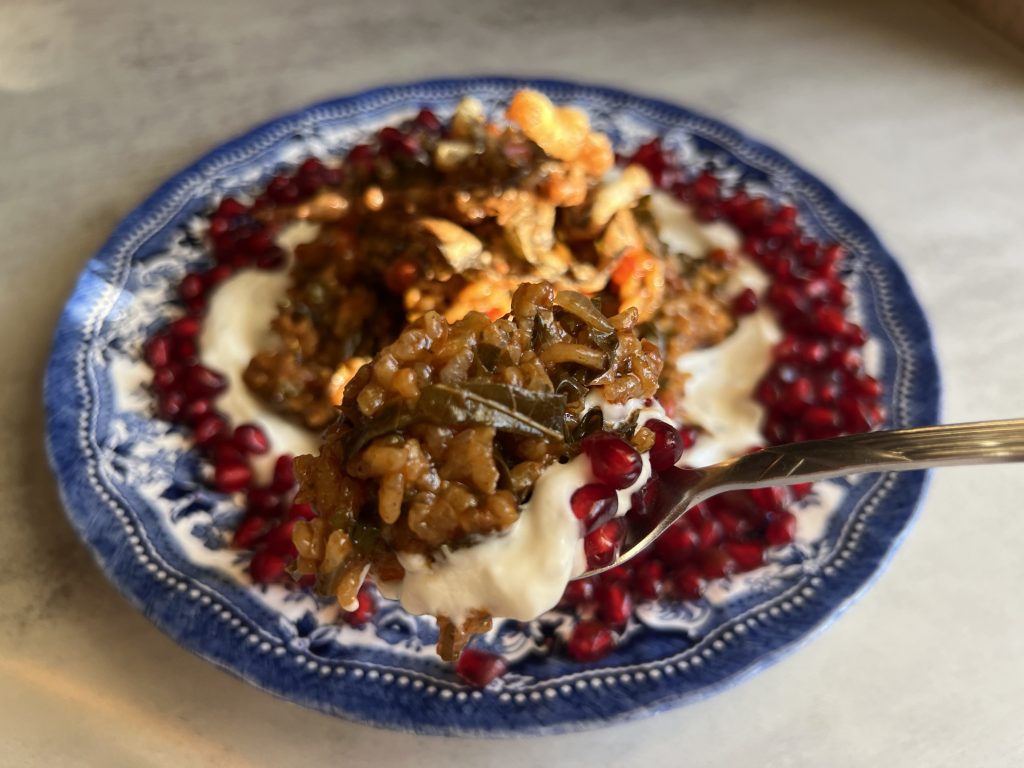
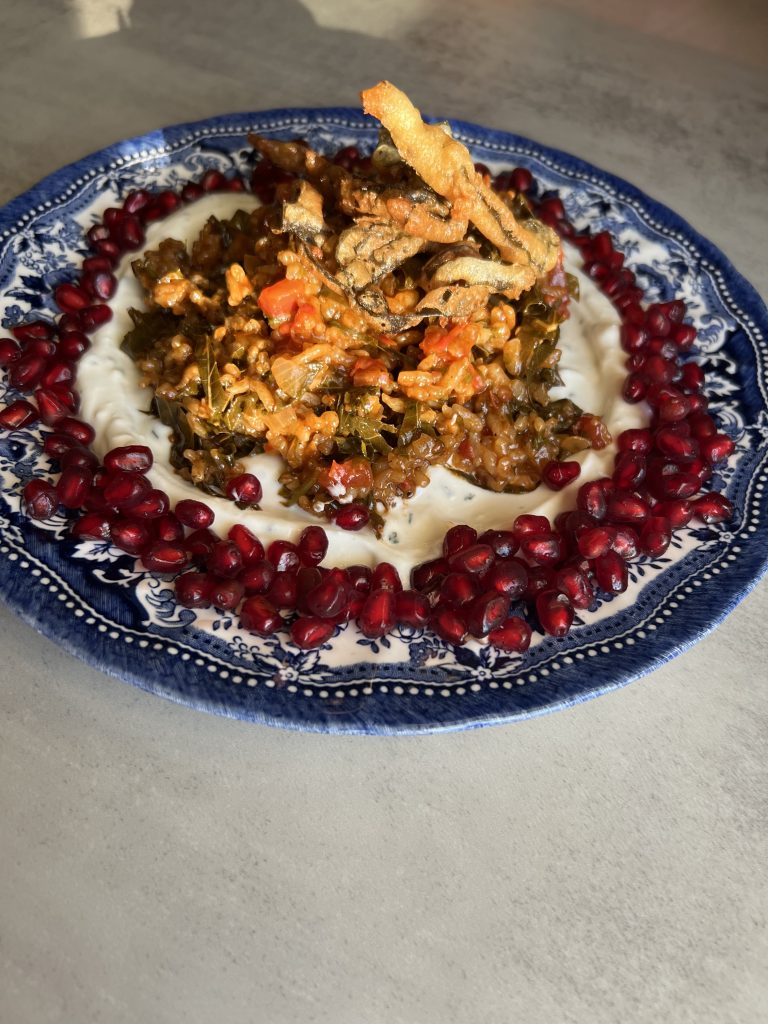
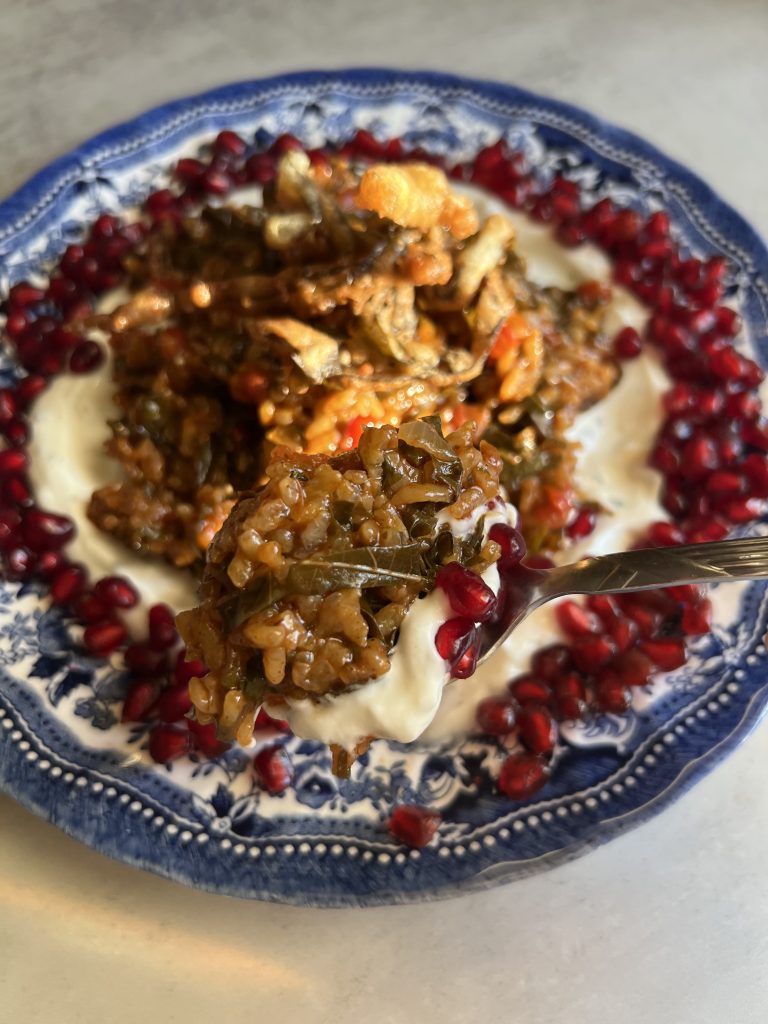
To make a proper fatteh, you need two essential components: a yogurt base and a crunchy topping. I kept the yogurt base simple so it wouldn’t overpower the flavors of the yalangi. For the crunch, I experimented with grape leaf tempura, but honestly, I didn’t feel it added anything special to the dish. A failed attempt, if you will! Sometimes, keeping things simple really is best. Fresh pomegranate seeds turned out to be the perfect complement, adding a beautiful pop of color, freshness, and just the right amount of tartness.
I hope you give this dish a try and enjoy a little taste of the Levant, reimagined in a whole new way.
Ingredients
- 1 cup short-grain rice
- ⅓ cup + 2 tablespoons extra-virgin olive oil
- 1 small onion, finely chopped
- 3 small Roma tomatoes, chopped
- ½ cup Italian parsley, chopped
- 8–10 grape leaves
- 1 heaping tablespoon tomato paste
- 1 heaping tablespoon pepper paste
- ½ teaspoon ground cinnamon
- ¼ teaspoon black pepper
- ½ teaspoon Aleppo pepper
- ½ teaspoon onion powder
- 2–3 teaspoons salt, or to taste
- 1 tablespoon dried mint
- ¼ cup tamarind
- ¼ cup pomegranate molasses
- 2 cups water
For the yogurt sauce
- Plain yogurt
- Dried mint, to taste
- Salt, to taste
For serving
- Fresh pomegranate seeds
Instructions
1. Prepare the rice.
Wash the rice three times, or until the water runs clear. Soak for 1 hour, then drain well.
2. Prepare the vegetables and grape leaves.
Finely chop the onion, tomatoes, and parsley.
If using fresh grape leaves, boil them until they change color. Drain, stack, roll, and slice them into thin strips.
If using jarred grape leaves, rinse them a couple of times to remove the brine, then soak them in hot water for 1 hour. Remove the tough center stems, roll the leaves, and slice them into thin strips.
3. Sauté the aromatics.
Heat the olive oil in a pot over low heat. Add the chopped onion and cook until softened.
Add the sliced grape leaves and cook for 1 minute, stirring occasionally. Add the tomato paste and pepper paste, then cook for another 30 seconds.
4. Add the spices.
Add the cinnamon, black pepper, Aleppo pepper, onion powder, and salt to taste. Stir well to combine and allow the spices to become fragrant.
5. Add the rice.
Add the drained rice and stir well, making sure every grain is coated in the oil and seasoned mixture. Cook over low heat for 1 minute.
6. Add the fresh ingredients.
Remove the pot from the heat. Stir in the chopped tomatoes, parsley, dried mint, tamarind, and pomegranate molasses. Mix thoroughly until everything is evenly distributed.
7. Cook the rice.
Add the water and bring everything to a gentle boil. Cover the pot, reduce the heat to low, and simmer for 20 minutes.
Halfway through cooking, gently stir the rice from the bottom of the pot to prevent sticking.
Once the rice is cooked, turn off the heat. You may notice some liquid remaining in the pot, but don’t worry! Keep the pot covered and allow the rice to cool to room temperature. The rice will continue to absorb the liquid as it rests.
8. Prepare the yogurt sauce.
Keep it simple! Mix plain yogurt with dried mint and salt to taste. The goal is to complement the yalangi without overpowering its beautiful flavors.
9. Assemble and serve.
Spread the yogurt sauce over your serving plate, add the yalangi, and finish with a generous sprinkle of fresh pomegranate seeds. Serve at room temperature and enjoy!
And honestly? You can absolutely enjoy this yalangi on its own, without the yogurt or any toppings. It’s delicious just as it is!